Warehouses, auto shops, and industrial facilities present the harshest possible environments for security hardware. Standard plastic surface mounts will shatter under the weight of a forklift, and the loose tolerances of rolling steel doors will cause endless false alarms.
Commercial overhead door sensors are specifically engineered to survive industrial abuse. Featuring extruded aluminum housings, massive magnetic fields, and armored cabling, these devices are the heavyweights of the perimeter security industry.
Floor Mount vs. Rail Mount
When securing an overhead garage door, installers must choose between two primary mounting locations, each with distinct structural advantages.
| Mounting Type | Location | Advantages | Disadvantages |
|---|---|---|---|
| Floor Mount | Switch bolted directly to the concrete floor; Magnet on bottom edge of door. | Highly visible deterrent. Captures exact floor-seal position. | Exposed to vehicle tires, forklifts, and dirt buildup. Requires masonry drilling. |
| Track / Rail Mount | Switch clamped to the vertical guide rail; Magnet mounted on the door face. | Keeps the sensor off the floor, away from vehicles and debris. No concrete drilling needed. | Door rattling in the track can sometimes push the magnet out of alignment during high winds. |
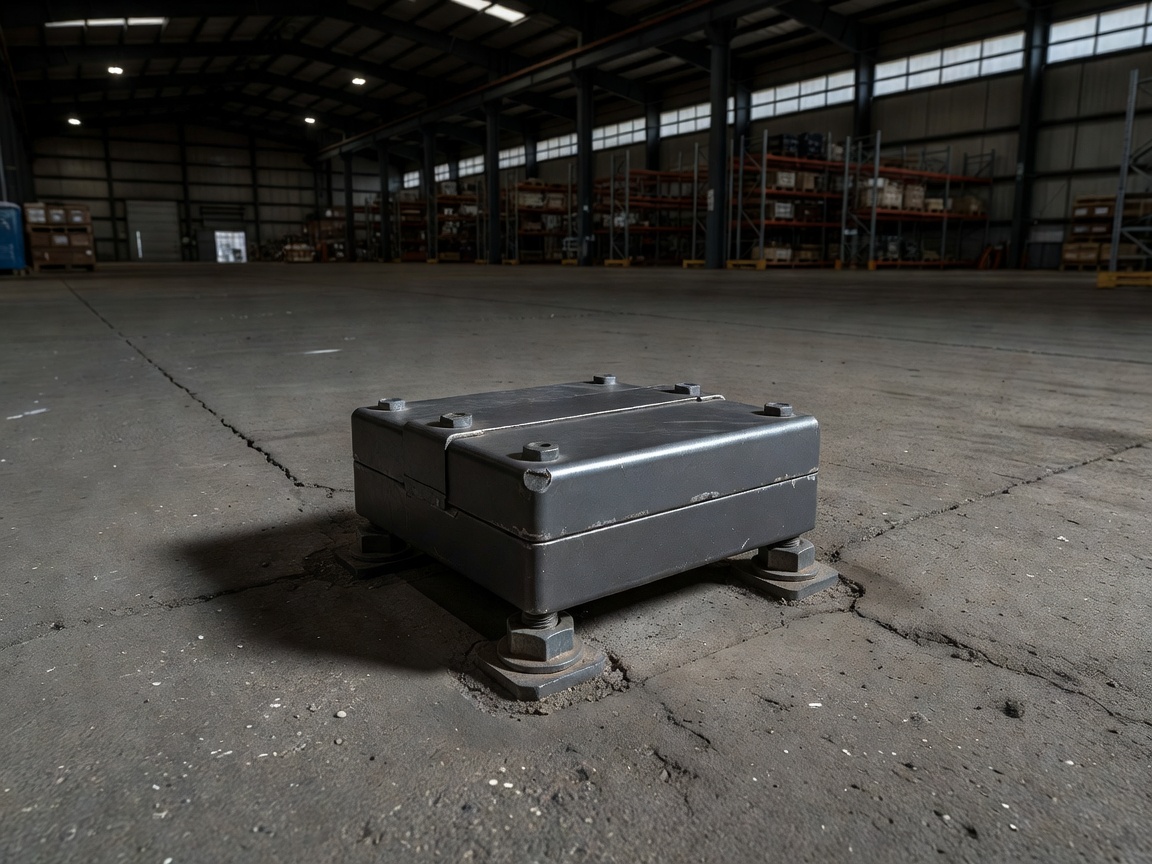
Floor mounting is generally preferred for rigid roll-up doors in environments without heavy forklift traffic, as the rugged aluminum casing of a floor sensor is designed specifically to withstand the weight of a standard passenger vehicle driving over it. Rail mounting is preferred in heavy industrial environments where keeping wires off the floor is a safety requirement.
Wide Gap Mechanics
Industrial overhead doors do not close tightly. Wind pressure, age, and temperature expansion can cause a rolling steel door to flex inward or outward by several inches. If a standard 3/4-inch gap sensor were used, this flexing would instantly trigger a false alarm, resulting in costly police dispatch fees.
Commercial sensors feature oversized magnets and sensitive internal reed arrays designed to bridge massive operating gaps—frequently between 2.5 inches to 3.5 inches. This allows the door to rattle violently in a storm without breaking the magnetic circuit, while still detecting a genuine forced entry attempt where the door is lifted off the ground.
Armored Cabling and Tamper Resistance
Industrial environments are full of moving parts, pallets, and tools that can easily sever a standard copper alarm wire. Commercial overhead sensors terminate in an armored stainless steel cable (often referred to as "BX" or flexible conduit). This armoring protects the wiring from accidental crushing, rodent damage, and deliberate tampering.
Furthermore, because these sensors secure high-value commercial inventory, they frequently employ built-in End of Line (EOL) resistors and multi-state wiring (SPDT) to provide supervisory status back to a commercial fire and burglar panel.
Conclusion
Attempting to cut costs by installing residential-grade sensors on commercial overhead doors is a guaranteed path to false alarms and broken hardware. By investing in heavy-duty aluminum housings, wide-gap magnetic tolerances, and armored cabling, facility managers ensure their rolling steel doors remain reliably monitored regardless of environmental stress.