Surface mount door sensors are the most ubiquitous components in both DIY and professional security systems. Because they attach externally to the door and frame without requiring invasive carpentry, they are the preferred choice for retrofits, renters, and rapid deployments.
This guide evaluates the mechanical considerations of surface mounts, including mounting methods, alignment challenges on non-uniform door frames, and managing exposed wiring.
Adhesive vs. Screw Mounting
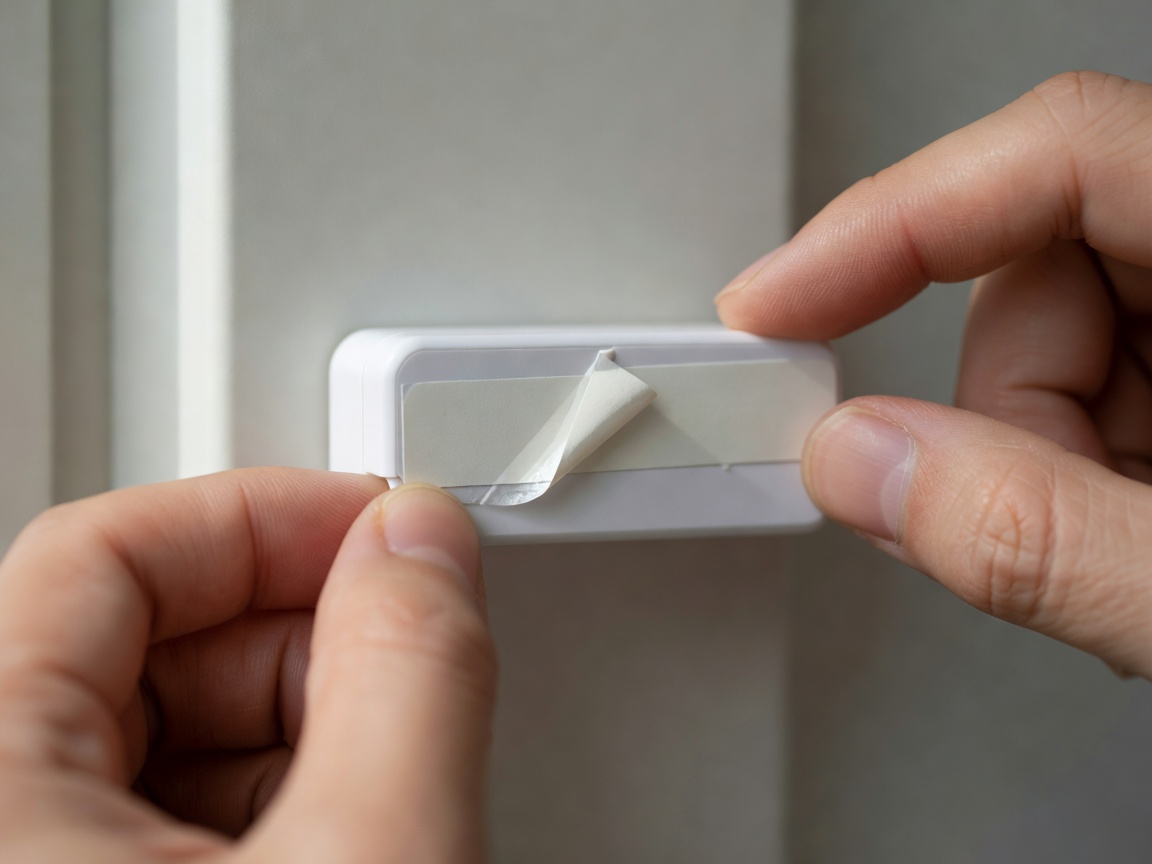
The primary advantage of surface mount sensors is the ease of installation, generally falling into two categories: adhesive tape and physical screws.
| Mounting Method | Pros | Cons |
|---|---|---|
| Double-Sided Tape (VHB) | Zero tools required. No damage to door or frame. Excellent for renters and uPVC frames. | Can fail due to temperature swings, humidity, or poor surface prep. May rip paint off upon removal. |
| Wood / Sheet Metal Screws | Permanent mechanical bond. Cannot be knocked off easily by impacts. | Requires drilling pilot holes. Leaves permanent holes in the frame and door. |
Industry best practice dictates utilizing both when possible. High-quality VHB (Very High Bond) tape can hold the sensor in place during alignment testing, followed by securing the device with small screws for long-term stability. For uPVC (vinyl) doors, screws can compromise the weatherproofing or shatter the plastic housing, making high-quality tape the only viable option.
Alignment and Gap Spacing
Unlike recessed sensors which benefit from perfectly parallel drilled holes, surface mounts must contend with molding, trim, and uneven door faces. The switch (wired) must sit on the static frame, while the magnet sits on the moving door. They must align physically along their long axes.
Standard surface mount sensors feature a gap tolerance of roughly 1/2 to 3/4 of an inch. If door trim creates a height discrepancy where the switch sits significantly higher or lower than the magnet, the magnetic field may fail to reach the reed switch.
Using Spacers
To fix height discrepancies, installers use plastic spacers. By stacking spacers under either the magnet or the switch, you can elevate the lower component until it is flush with its partner. Failure to correct vertical misalignment is a leading cause of intermittent false alarms, especially when wind rattles the door within its frame.
Wired vs. Wireless Variants
Surface mount sensors are the primary form factor for modern wireless alarm systems (such as Ring, SimpliSafe, and traditional DSC/Honeywell wireless panels). In these systems, the sensor housing is much larger than a hardwired variant because it must contain a battery (usually a CR123A or CR2032 coin cell) and an RF radio transmitter.
Hardwired surface mounts are significantly smaller—often no larger than a piece of chewing gum. However, the installer must run a physical wire along the door frame, down the baseboards, or through the wall cavity to hide the cable path. Exposed wire runs are vulnerable to being snagged or cut, so utilizing surface-mount wire channel (raceway) is highly recommended for clean, secure installations.
Conclusion
Surface mount door sensors democratize perimeter security. They are fast to install, easily replaceable, and adaptable to almost any door or window style. By paying strict attention to surface preparation for adhesives, properly managing vertical alignment with spacers, and respecting the maximum operating gap, a surface mount sensor can provide decades of reliable protection.